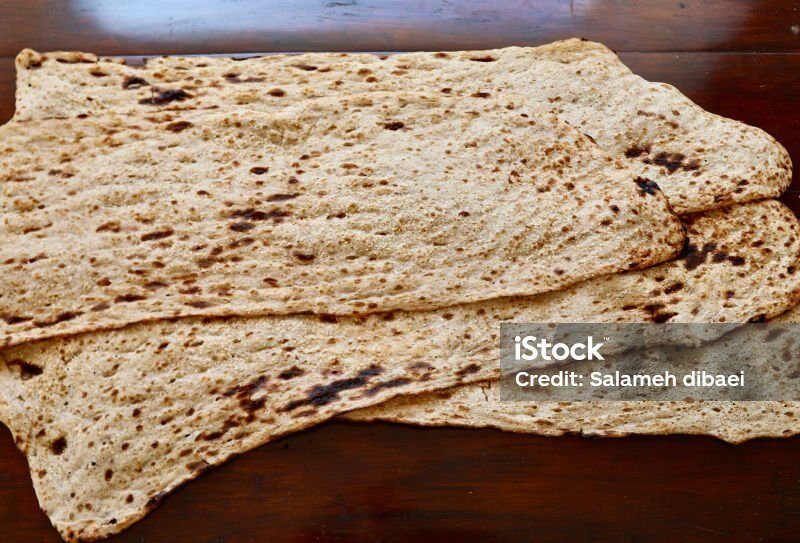
Sangak bread, also called Nân-e Sangaka, is a classic Iranian flatbread made from whole-wheat flour and shaped into a triangle.
Sangak is the Persian word for “pebble.” This bread is baked on small river stones in an oven. Iranian bakeries sell two types of sangak: a plain version and a more expensive one with toppings. The toppings can include poppy seeds, sesame seeds, cumin, black cumin, caraway seeds, or dried herbs, although the latter are used less often.
Sangak has a long link with the Persian army. The earliest record of it dates to the 11th century. Every soldier brought pebbles, which they used to build a “Sangak oven” at camp to bake bread for the group. They often ate it with Persian lamb kebab.
People in modern-day Azerbaijan, which was once part of Iran, also enjoy this bread. But after the Soviets took over in 1920, it became less common there because they used large factories to bake bread, which differed from the handmade Sangak method.
Sangak is always made with a very wet dough. After mixing, usually in a big mixer, the baker scoops out some of the sticky dough and shapes it into a rough triangle on a greased metal paddle. The baker can add toppings if wanted. The paddles for Sangak are very long, sometimes up to 3 meters (10 feet). This long handle allows the baker to gently slide the dough onto a large, usually gas-heated, spinning tray. The tray is covered with smooth river stones, which give Sangak its bumpy pattern and thick, chewy parts, with thin, crispy edges.
The baker must skillfully transfer the formed dough from the oiled peel and stretch it over the stones. A triangle of dough may start nearly equilateral on the peel but morphs into a tall isosceles triangle when poured onto the heated stones. This process demands extensive experience, and some bakeries boast about their bakers’ skills by claiming to produce the longest Sangak in their city or region.
Once the bread has baked for about three-quarters of the time, it is removed with a three-pronged hook on a long pole. In rotating ovens, this is done through a different opening than where the dough is placed. The bread may be folded in half and then dropped onto a metal mesh to shake off any pebbles that stick . It cools on the mesh before being hung on bakery walls or sold to customers once it’s cool enough to touch.